


Human relationships encompass four principal categories: family, friendships, romantic partnerships, and professional connections. Each category involves specific patterns of emotional engagement, communicative behavior, and social function that shape how individuals form, sustain, and navigate interpersonal bonds.
These relational types serve distinct roles within social and psychological systems. Family relationships constitute foundational bonds, typically defined by biological, legal, or cultural ties, underpinning identity formation and support networks. Friendships are voluntary affiliations marked by mutual trust, reciprocity, and shared experiences, acting as critical sources of emotional support and social integration. Romantic relationships combine emotional intimacy, physical attraction, and commitment, often influencing personal development and life decisions. Professional relationships, including acquaintanceships and collegial interactions, emphasize task-oriented collaboration within organizational or social environments, governed by boundaries and functional communication.
Empirical research from institutions such as Australian National University and UCLA highlights the variability and complexity within these categories, noting how emotional intensity, commitment levels, and relational ambivalence affect psychological well-being and social adaptability. Moreover, contemporary models recognize the fluidity and intersectionality among these relationship types, reflecting dynamic social contexts and individual variability.
This comprehensive guide examines the core relationship categories, their interrelations, and extended classifications. Understanding these distinctions enables clearer expectations and more effective interpersonal communication across diverse social networks.
Next, we will examine why distinguishing between relationship types is crucial for personal development and social navigation.
Introduction: The Fundamental Categories of Human Connection
You form countless connections throughout your life, yet not all relationships serve the same purpose or carry equal weight. Understanding the distinct types helps you recognize what each connection offers and what it requires from you.
The Four Primary Relationship Types:
| Type | Primary Focus | Key Characteristics |
|---|---|---|
| Family | Blood/Legal bonds | Inherited connections, shared history |
| Romantic | Intimate partnership | Physical attraction, emotional intimacy |
| Friendship | Chosen companionship | Mutual interest, voluntary commitment |
| Professional | Work-based interaction | Task-focused, hierarchical structure |
Each category operates under different rules and expectations. Your family relationships often come with built-in history and obligations. Romantic partnerships blend emotional intimacy with physical connection.
Friendships represent the relationships you actively choose and maintain through shared interests and compatible personalities. Professional relationships focus on accomplishing tasks and maintaining workplace harmony.
You might notice overlap between categories. A romantic partner can become your closest friend. A colleague might develop into a trusted confidant outside work hours.
The boundaries between these types shift based on circumstances, time, and human connection patterns. Your relationship with a sibling differs vastly from your bond with a spouse, even when both provide emotional support.
Recognizing these differences allows you to adjust your expectations and communication style appropriately. You bring different versions of yourself to each type of relationship, and that’s perfectly normal.
Why Understanding Relationship Types Matters
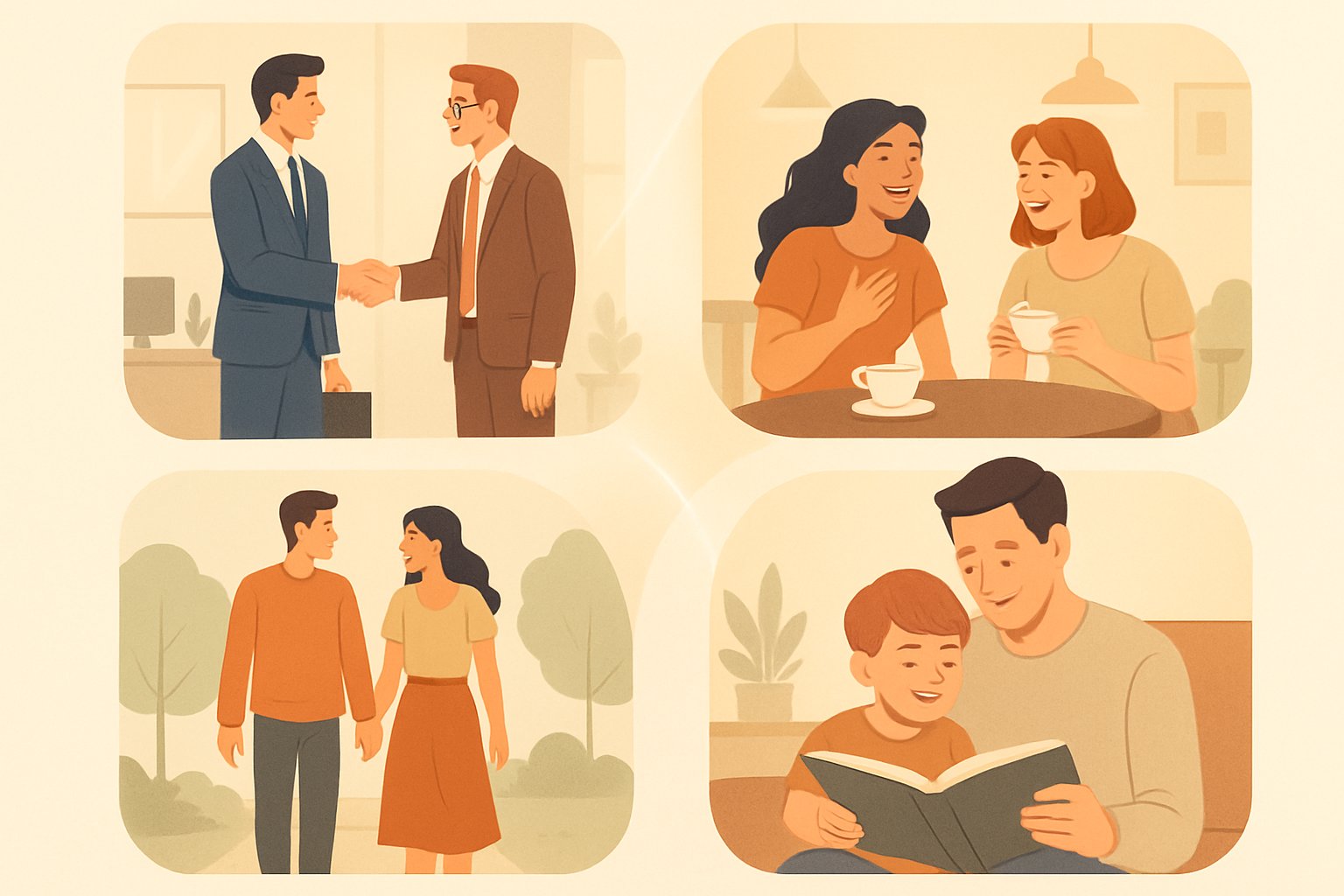
Recognizing different relationship patterns helps you identify what you actually want versus what you think you should want. You gain clarity about your emotional needs and communication preferences.
Self-awareness transforms how you approach connections. When you understand your attachment style and relationship goals, you make better choices about partners and situations.
Many people struggle in relationships because they never learned to distinguish between different types of connections. You might confuse physical attraction with emotional compatibility or mistake intensity for intimacy.
Understanding these distinctions prevents you from forcing incompatible relationship types into situations where they don’t belong. A casual connection requires different boundaries than a committed partnership.

Your communication patterns shift when you recognize relationship categories. You learn to have honest conversations about expectations rather than assuming everyone shares your definition of terms like “dating” or “exclusive.”
| Relationship Type | Key Communication Need | Common Misunderstanding |
|---|---|---|
| Casual | Clear boundaries | Assuming it will become serious |
| Romantic | Emotional vulnerability | Confusing passion with compatibility |
| Committed | Future planning | Taking stability for granted |
| Platonic | Mutual respect | Expecting romantic potential |
Knowledge about relationship dynamics helps you recognize red flags earlier. You spot patterns like love-bombing, emotional unavailability, or manipulation before investing too deeply.
This awareness protects your emotional well-being and time. You learn when to stay, when to leave, and when to adjust your expectations based on what type of relationship you’re actually in rather than what you hope it might become.
According to dating statistics and relationship research, people who understand relationship categories report higher satisfaction and less dating burnout.
The 4 Main Types of Relationships: A Comprehensive Guide

Human connections form four distinct categories that shape your daily interactions and emotional well-being. Each type serves different purposes in your life and requires specific skills to maintain successfully.
1. Family Relationships: Our Foundational Bonds
Family relationships form your first understanding of connection and often last throughout your lifetime. These bonds include parents, siblings, grandparents, and extended family members who share biological or legal ties with you.
Blood relationships create unique dynamics because you cannot choose these connections. Your family shapes your early attachment styles and communication patterns. These relationships often involve unconditional love mixed with complex obligations.
Chosen family represents people you consider family despite lacking biological ties. This might include close friends, mentors, or partners who provide the support and belonging traditional families offer.
Family relationships require different maintenance than other connections. You might need to set boundaries with toxic family members while honoring positive relationships. Family systems operate through established roles and patterns that can take years to change.
The foundation you build with family affects your ability to form other relationships. Healthy family bonds teach trust, conflict resolution, and emotional regulation. Dysfunctional family patterns often repeat in other relationship types unless you actively work to change them.
2. Friendships: Chosen Connections of Mutual Support
Friendships represent voluntary relationships built on shared interests, values, or experiences. Unlike family ties, you actively choose your friends and can end these relationships when they no longer serve you.
Close friendships provide emotional support, shared activities, and mutual trust. These relationships often involve regular communication and emotional intimacy. You might have 3-5 close friends who know your deepest thoughts and feelings.
Casual friendships offer companionship without deep emotional investment. These might include workout partners, hobby groups, or colleagues you enjoy spending time with occasionally.
Platonic relationships can exist between any genders without romantic involvement. Research shows aromantic people often develop deep friendships that provide the emotional connection others find in romantic partnerships.
Friendship maintenance requires reciprocity. Both people must invest time, energy, and care for the relationship to thrive. Good friends celebrate your successes without jealousy and support you during difficult times.
3. Acquaintanceships: Casual but Valuable Social Connections
Acquaintanceships form the largest category of your social connections. These relationships involve people you know but don’t consider close friends or family members.
Professional acquaintances include coworkers, clients, and industry contacts. These relationships focus on work-related interactions but might include some personal elements. You maintain professional boundaries while being friendly and cooperative.
Social acquaintances encompass neighbors, classmates, gym members, or people you meet through activities. These connections provide social variety and might develop into friendships over time.
Service relationships involve people you interact with regularly but in specific contexts. This includes your doctor, hairstylist, barista, or mechanic. These relationships can be warm and personal while remaining functionally focused.
Acquaintanceships require minimal maintenance but offer significant value. They expand your social network, provide diverse perspectives, and create a sense of community belonging. Many opportunities arise through acquaintance networks.
4. Romantic Relationships: Intimate Emotional and Physical Bonds
Romantic relationships combine emotional intimacy, physical attraction, and partnership commitment. These connections typically involve exclusive emotional and physical intimacy between partners.
Dating relationships represent the exploration phase where you determine compatibility. These relationships involve getting to know someone’s values, lifestyle, and relationship goals. Physical and emotional intimacy gradually increases as trust develops.
Committed partnerships include serious dating, engagement, or marriage where both people prioritize the relationship. These involve shared future planning, financial decisions, and life integration. Partners become primary emotional supports for each other.
Physical intimacy distinguishes romantic relationships from other types. This includes sexual connection, affectionate touch, and romantic gestures. The physical component creates unique bonding experiences and requires ongoing communication about needs and boundaries.
Relationship styles vary significantly between individuals. Some people prefer monogamous partnerships while others choose non-monogamous arrangements. Dating apps now cater to people seeking serious relationships who want long-term commitment rather than casual encounters.
Romantic relationships demand the most active maintenance. Partners must communicate regularly, resolve conflicts constructively, and continually choose each other despite changing circumstances. These relationships offer the deepest intimacy but also require the greatest vulnerability.
How These Relationship Types Interact and Overlap
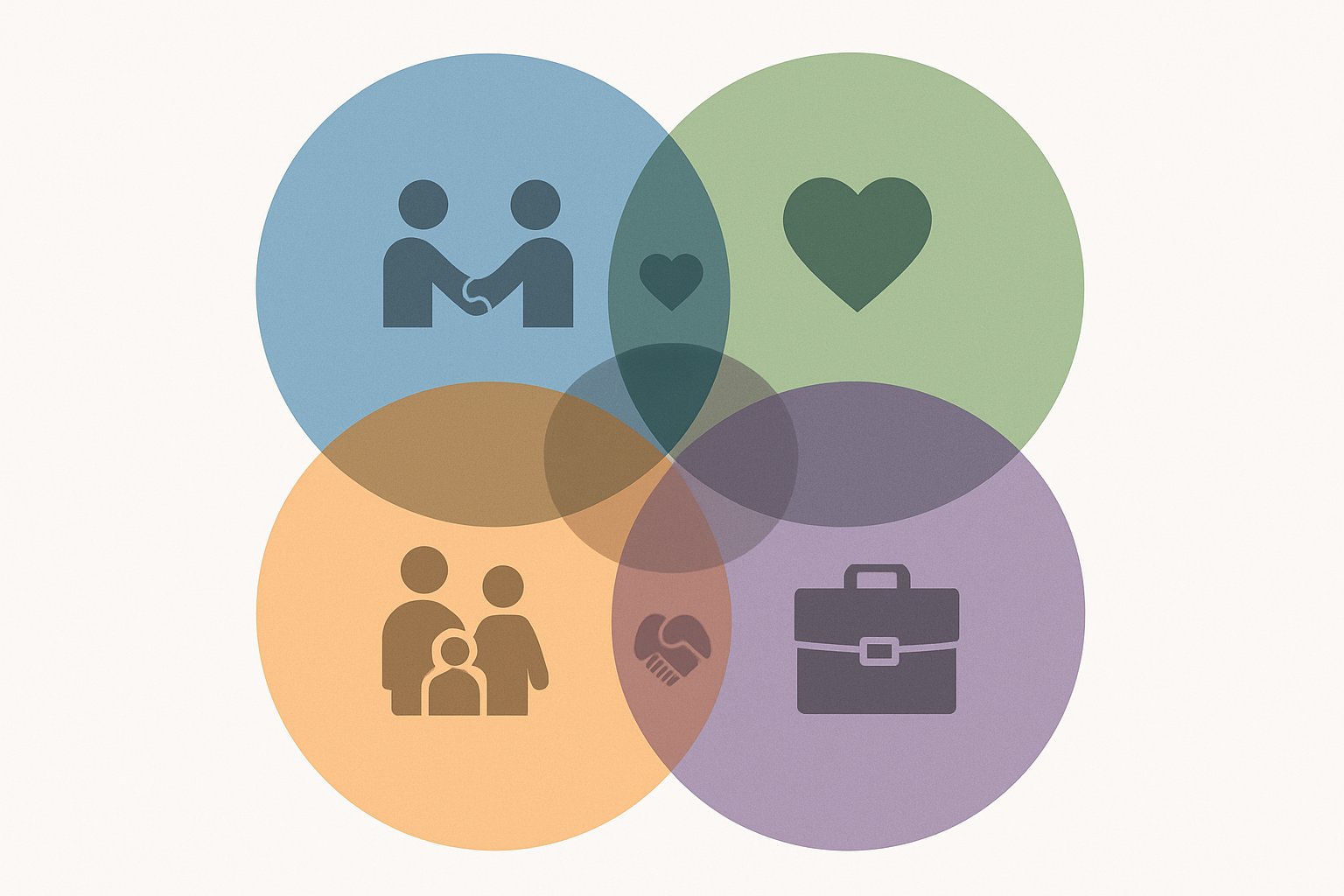
Relationships rarely exist in isolation. Your connections with others often blend characteristics from multiple relationship types, creating complex dynamics that shift over time.
Romantic relationships frequently incorporate elements from other categories. You might maintain a friendship foundation with your partner while building romantic intimacy. Many couples describe their spouse as “my best friend,” highlighting this natural overlap.
Your family relationships can evolve to include friendship qualities as you mature. Adult siblings often develop peer-like bonds that transcend traditional family roles. You might find yourself seeking advice from a parent who becomes more of a mentor figure.
Professional relationships sometimes cross into personal territory. Coworkers can become genuine friends, though this requires careful boundary management. You need to balance workplace expectations with personal connection.
| Primary Type | Common Overlaps | Potential Challenges |
|---|---|---|
| Romantic | Friendship + Family-like bonds | Role confusion, expectations |
| Family | Friendship dynamics | Changing power structures |
| Professional | Casual friendship | Boundary conflicts |
| Friendship | Romantic feelings | Relationship transitions |
Casual relationships often serve as testing grounds for deeper connections. Your coffee shop acquaintance might become a close friend. A friend could develop into a romantic partner through gradual intimacy building.
The boundaries between relationship types become fluid during major life changes. Divorce might transform a romantic partnership into a co-parenting friendship. Career shifts can move professional relationships into personal spheres.
You experience these overlaps as natural relationship evolution rather than category violations. Understanding these intersections helps you manage expectations and communicate needs across different relationship contexts.
Key Characteristics Comparison Chart

Understanding the different relationship types becomes clearer when you examine them side by side. This comparison reveals how each connection serves different needs in your life.
| Relationship Type | Emotional Investment | Time Commitment | Physical Intimacy | Future Planning | Conflict Resolution |
|---|---|---|---|---|---|
| Family | High, unconditional | Lifelong | Non-romantic | Generational focus | Direct, values-based |
| Romantic | Very high, passionate | Daily interaction | Central component | Shared goals | Collaborative problem-solving |
| Friendship | Moderate to high | Flexible scheduling | Minimal to none | Individual support | Open communication |
| Professional | Low to moderate | Work hours only | None | Career advancement | Formal protocols |
Communication Patterns vary dramatically across these connections. You share intimate thoughts with romantic partners and close friends. Family conversations often revolve around shared history and traditions. Professional relationships require structured, goal-oriented dialogue.
Boundary Setting differs based on relationship type. Family boundaries can feel complex due to long history together. Romantic relationships need clear expectations about exclusivity and commitment. Friendships thrive with mutual respect for personal space. Professional connections require strict behavioral guidelines.
Support Systems function differently too. Family provides foundational security during major life changes. Romantic partners offer daily emotional support and shared decision-making. Friends give perspective and encouragement during specific challenges. Professional relationships provide career guidance and skill development.
Longevity Expectations shape how you approach each connection. Family bonds typically last your entire lifetime. Romantic relationships aim for long-term commitment but may end. Friendships often adapt to life changes and distance. Professional relationships usually have defined endpoints based on career moves.
Developing Healthy Relationships Across All Types
Building strong connections requires consistent effort across family bonds, friendships, romantic partnerships, and professional interactions. The foundation remains the same regardless of relationship type.
Communication forms the backbone of every healthy relationship. You need to express your thoughts clearly while listening actively to others. This means putting down your phone during conversations and asking follow-up questions that show genuine interest.
Happy couples share common traits that extend beyond romance into all relationship types. These include mutual respect, shared values, and the ability to resolve conflicts constructively.
Set boundaries early and maintain them consistently. You teach people how to treat you through what you accept. Whether it’s a coworker who interrupts constantly or a family member who dismisses your feelings, clear boundaries protect your well-being.
Practice empathy by considering other perspectives before reacting. When your friend cancels plans last minute, consider they might be struggling with something personal rather than assuming they don’t value your time.
Trust builds slowly through small, consistent actions. Following through on commitments, keeping confidences, and showing up when needed creates the reliability that relationships require.
Asking deep questions strengthens connections across all relationship types. Move beyond surface-level conversations by asking about dreams, fears, and experiences that shaped the other person.
Invest time and energy proportionally to the relationship’s importance in your life. Your romantic partner deserves more attention than a casual acquaintance, but every relationship needs some level of nurturing to thrive.
Apologize sincerely when you make mistakes. Acknowledge the specific behavior, express genuine remorse, and commit to change. This applies whether you’ve hurt your spouse’s feelings or missed an important deadline at work.
Other Important Relationship Classifications
Beyond the four primary relationship types, researchers have identified several other meaningful ways to categorize human connections. These classifications help you understand the nuanced ways relationships function in your life.
Attachment-based relationships form one of the most studied frameworks. Your attachment patterns influence how you connect with others across all relationship types. You might display secure, anxious, avoidant, or disorganized attachment styles.
Transactional versus transformational relationships represent another classification. Transactional connections focus on exchanges – you give something to receive something back. Transformational relationships change who you are through the connection itself.
You might also encounter symmetrical versus complementary relationships. Symmetrical relationships involve partners with similar power, status, or roles. Complementary relationships feature different but interlocking roles that balance each other.
Digital versus in-person relationships have become increasingly relevant. Your online connections may follow different patterns than face-to-face relationships, though both can provide meaningful connection.
Chosen versus assigned relationships distinguish between connections you actively select and those determined by circumstances. You choose friends but are assigned family members or coworkers.
Temporary versus permanent relationships acknowledge that some connections serve specific timeframes. Your relationships with neighbors, classmates, or project partners may have natural endpoints, while others are intended to last indefinitely.
Understanding these classifications helps you recognize the diverse ways relationships function and adapt your expectations accordingly.
Supplemental Content: Common Questions About Relationship Types
People often seek clarity about relationship categories beyond the basic four types, particularly when trying to understand different relationship frameworks and specialized terminology that applies to specific contexts.
Are There 5 Relationships in Your Life?
Some relationship models identify five key relationship categories that shape your daily interactions. These include romantic partnerships, family bonds, friendships, professional connections, and your relationship with yourself.
The five-relationship framework expands traditional models by recognizing self-relationship as a foundational element. Your relationship with yourself influences how you connect with others across all categories.
Professional relationships occupy their own space because workplace dynamics require different boundaries than personal connections. You maintain colleague relationships through shared goals rather than emotional intimacy.
Family relationships differ from friendships through biological or legal bonds that create lasting obligations. These connections often survive conflicts that might end other relationship types.
Your romantic partnership typically involves the deepest emotional intimacy and future planning. This relationship type usually includes physical attraction, shared living arrangements, and long-term commitment discussions.
What Are the 4 Types of Couples?
Relationship researchers identify four distinct couple types based on communication patterns and conflict resolution styles. These categories help you understand different approaches to partnership dynamics.
Validating couples discuss disagreements calmly and seek compromise through active listening. You’ll notice these partners acknowledge each other’s perspectives before presenting their own viewpoints.
Volatile couples engage in passionate arguments but also express intense affection. Your conflicts might be loud and emotional, but you make up with equal intensity and maintain strong connection.
Conflict-avoiding couples minimize disagreements and focus on positive aspects of their relationship. You might sidestep difficult conversations but maintain harmony through shared values and mutual respect.
Hostile couples engage in destructive communication patterns including criticism, contempt, defensiveness, and stonewalling. These patterns predict relationship failure without intervention and skill development.
What Are the 4 Types of Relationships in Nature?
Natural ecosystems demonstrate four primary relationship types that mirror human social dynamics. These biological interactions provide insight into how different connection styles serve survival purposes.
Mutualistic relationships benefit both parties equally, like flowers providing nectar while bees spread pollen. You might recognize this pattern in partnerships where both people contribute unique strengths.
Commensalistic relationships benefit one party without harming the other, such as birds nesting in trees. Some human relationships follow this pattern when one person gains significantly while the other remains neutral.
Parasitic relationships benefit one party at the expense of the other, like ticks feeding on mammals. You can identify these patterns in human connections where one person consistently takes without giving back.
Competitive relationships involve parties competing for the same resources, such as plants competing for sunlight. This mirrors workplace dynamics or sibling rivalry where you compete for attention or opportunities.
What Are the 4 Relationship Styles?
Attachment theory identifies four relationship styles based on your comfort with intimacy and anxiety about abandonment. These styles develop in childhood but influence adult relationship patterns throughout your life.
Secure attachment represents about 60% of adults and involves comfort with intimacy and independence. You communicate needs directly, handle conflict constructively, and maintain healthy boundaries with partners.
Anxious attachment involves high intimacy needs but fear of abandonment. You might seek constant reassurance from partners, worry about relationship security, and have difficulty with temporary separations.
Avoidant attachment includes comfort with independence but discomfort with close emotional connection. You value self-reliance, minimize emotional expression, and may struggle with partner’s intimacy needs.
Disorganized attachment combines anxious and avoidant patterns inconsistently. You might crave closeness while simultaneously fearing it, creating confusing relationship dynamics for both partners.
What Is a 4-Person Relationship Called?
A four-person romantic relationship is called a “quad” in polyamorous communities. This structure can take different forms depending on how the four individuals connect romantically and emotionally.
Kitchen table polyamory describes quads where all four people maintain friendly relationships and comfortable social interaction. You might share meals, celebrate holidays together, and function as an extended chosen family unit.
Parallel polyamory involves four people who maintain separate relationships without significant interaction between metamours. You focus on your individual connections rather than group dynamics or shared social activities.
Closed quads restrict romantic involvement to the four members, creating a bounded relationship structure. New romantic connections outside the quad require agreement from all existing members.
Open quads allow members to pursue additional relationships beyond the four-person core. This structure requires extensive communication skills and clear boundary agreements to maintain stability and trust.
Navigating Your Relationship Landscape
Understanding the four relationship types gives you a roadmap for your connections. You can now recognize where each relationship fits and what it needs to thrive.
Family relationships form your foundation, even when they’re complicated. Friendships offer chosen connection and mutual support. Romantic partnerships blend intimacy with commitment. Professional relationships create boundaries while building your career network.
| Relationship Type | Key Focus | Your Role |
|---|---|---|
| Family | Acceptance and boundaries | Navigate history while growing |
| Friendship | Mutual support and trust | Invest time and emotional energy |
| Romantic | Intimacy and partnership | Balance individual needs with togetherness |
| Professional | Respect and collaboration | Maintain boundaries while building rapport |
You don’t need to excel at all four types simultaneously. Some seasons of life call for deeper friendships. Others demand focus on romantic growth or family healing.
The patterns you notice across these relationships reveal your attachment style and communication habits. Do you withdraw when conflict arises? Do you over-give to avoid rejection?
Your relationship landscape shifts as you grow. College friendships may fade while new romantic connections deepen. Family dynamics evolve as parents age and siblings change.
Pay attention to which relationships drain you and which ones energize you. This awareness helps you invest your limited emotional resources wisely.
Each relationship type teaches you different skills. Family relationships show you unconditional love and forgiveness. Friendships teach reciprocity. Romance builds vulnerability and compromise. Professional bonds develop respect and clear communication.
You have the power to improve any relationship by changing how you show up in it.
Expert Resources for Deeper Relationship Understanding
Professional relationship counselors and therapists offer specialized insight into relationship patterns. Licensed Marriage and Family Therapists (LMFTs) possess advanced training in relationship dynamics. You can locate qualified professionals through directories like Psychology Today or the American Association for Marriage and Family Therapy.
Research institutions provide evidence-based relationship studies. The Gottman Institute offers decades of research on relationship success factors. Their website contains assessment tools and scientific findings about relationship stability.
Academic journals publish peer-reviewed relationship research. The Journal of Marriage and Family and Personal Relationships contain current studies. University libraries often provide free access to these publications.
Professional Assessment Tools:
| Tool | Purpose | Duration |
|---|---|---|
| Gottman Relationship Checkup | Identifies strength areas and growth opportunities | 30-45 minutes |
| PREPARE/ENRICH | Premarital and marital assessment | 45-60 minutes |
| Relationship Assessment Scale | Measures relationship satisfaction | 10-15 minutes |
Continuing education workshops teach relationship skills. Many community centers offer communication classes. Religious organizations frequently host relationship enrichment programs.
Online therapy platforms connect you with licensed professionals. BetterHelp and Talkspace provide relationship counseling services. These platforms offer flexible scheduling and video sessions.
Professional development books by relationship experts contain research-backed strategies. Authors like John Gottman, Sue Johnson, and Esther Perel combine clinical experience with practical guidance. Their works translate complex psychological concepts into actionable advice.
Local universities sometimes offer relationship education courses. Community colleges frequently include interpersonal communication classes in their continuing education programs.

This article was drafted with AI writing tools and edited by the Truth In Flirting team. It is general information, not therapy or personal advice. How we use AI.


