
The Best Relationship Books, Matched to What Your Relationship Needs
For most couples, the best relationship book to start with is The Seven Principles for Making Marriage Work by John Gottman and Nan Silver. It grew out of Gottman’s decades of studying couples at the University of Washington and gives you exercises to do together. But the right book depends on your problem: repeated fights, feeling like roommates, panic when your partner goes quiet, or fading desire each have a better fit below.
Below you’ll find a quick-pick table, how we chose the books, the picks grouped by problem (conflict, communication, attachment, desire, and dating), which books work best read together, which popular titles deserve a critical eye, and when a book isn’t enough.
Disclosure: As an Amazon Associate we earn from qualifying purchases. Buying through the book links on this page costs you nothing extra. Learn more.
How this list was made: this is a research summary, not a reading diary. See our method.
Which relationship book fits your problem?
Pick the book that matches the problem you actually have. Couples who argue in circles get more from a conflict book than from a love-languages quiz, and someone who feels anxious whenever a partner pulls away will get more from an attachment book than from a marriage manual.
| Your situation | Start with | Why this one | Read together? |
|---|---|---|---|
| You want one all-round book | The Seven Principles for Making Marriage Work | Covers friendship and conflict, with questionnaires and exercises | Yes |
| You keep having the same fight | Fight Right | Focuses only on conflict styles and how to calm a fight down | Yes |
| You feel distant, like roommates | Hold Me Tight | Seven guided conversations for rebuilding emotional closeness | Yes |
| Talks turn into blame | Nonviolent Communication | A four-step method for saying what you need without accusing | Either |
| You feel anxious when a partner pulls away | Attached | Explains anxious, avoidant, and secure patterns | Alone first |
| Desire has faded | Mating in Captivity or Come as You Are | Two different explanations of why desire changes | Either |
| You’re planning a long-term commitment | Eight Dates | Eight planned dates with question lists for two | Yes |
| You’re single and want to break a pattern | Attached or Calling in the One | Self-assessment before you choose a partner | Alone |
The table points you to a starting book. The next section explains how each one earned its place.
How we chose these books (and what the labels mean)
This list is a research summary. The Truth In Flirting editorial team, which writes under pen names and uses AI drafting tools, compared each book’s author background, the research or therapy model behind it, and any published criticism. We did not read every book cover to cover, and we don’t claim to have. Each pick carries one of three evidence labels:
- Research-based: the book is built on the authors’ own studies of couples or on an established research model, such as Gottman’s lab studies or the Dual Control Model of sexual response.
- Clinical model: the book is based on a couples-therapy method used by trained therapists, such as Emotionally Focused Therapy (EFT) or Imago Relationship Therapy.
- Experience and ideas: the book draws on the author’s clinical practice, philosophy, or faith background rather than on tested outcomes.
A label isn’t a quality score. Some of the most quoted books on love sit in the third group. The label tells you what kind of advice you’re getting. Read more about our process in our review guidelines and AI editorial policy.
Best books for couples who fight or feel disconnected
Most couples don’t need a book about finding love. They need one about the fight they keep having or the distance that crept in. These five books focus on conflict, repair, and emotional connection. Three come from the Gottman research program, one from Sue Johnson’s Emotionally Focused Therapy, and one from Imago Relationship Therapy.
The Seven Principles for Making Marriage Work by John Gottman and Nan Silver
Author: John M. Gottman, PhD, professor emeritus of psychology at the University of Washington, with journalist Nan Silver · First published: 1999 (revised 2015) · Evidence: Research-based · Best for: couples who want one practical, all-round book · Read together? Yes, with questionnaires and exercises
The Seven Principles is the book to read if you want a single, practical overview of what separates stable couples from struggling ones. Gottman argues that lasting couples build a strong friendship first: they know each other’s worlds, express fondness, and respond when a partner reaches out for attention. The book also names four patterns that predict trouble, which Gottman calls the “Four Horsemen”: criticism, contempt, defensiveness, and stonewalling.
Worth knowing: the book is often sold with the claim that Gottman can predict divorce with about 94% accuracy. That figure comes from a small study, and it’s discussed in the critical-reading section below.

Fight Right by Julie Schwartz Gottman and John Gottman
Authors: Julie Schwartz Gottman, PhD, a clinical psychologist, and John Gottman, PhD · First published: 2024 · Evidence: Research-based (draws on the Gottmans’ research, cited in general terms) · Best for: couples stuck in the same argument · Read together? Yes
Fight Right is the narrower, newer companion to The Seven Principles, and it deals only with conflict. It describes common conflict styles, which the Gottmans call avoiders, validators, and volatiles, and shows how partners with different styles can work together. Its main advice is to calm down and understand each other before trying to solve anything. Choose it over The Seven Principles if arguments, not distance, are your main problem.


Hold Me Tight by Sue Johnson
Author: Dr. Sue Johnson, clinical psychologist and developer of Emotionally Focused Therapy (EFT) · First published: 2008 · Evidence: Clinical model · Best for: couples who feel emotionally distant · Read together? Yes, it’s built around seven conversations for two
Hold Me Tight treats most couple fights as panic about losing the connection, not as disagreements about dishes or money. Johnson describes negative cycles she calls “Demon Dialogues,” such as one partner pursuing while the other withdraws. The book then walks you through seven conversations meant to help each partner reach for the other again.
Worth knowing: EFT has solid support as a therapy. A 2019 meta-analysis of 33 randomized trials with 2,730 participants found a medium effect at the end of treatment, according to Rathgeber and colleagues in the Journal of Marital and Family Therapy. That evidence is for therapy with a trained therapist, not for reading the book on your own.

Eight Dates by John Gottman, Julie Schwartz Gottman, Doug Abrams, and Rachel Carlton Abrams
Authors: the Gottmans with Doug Abrams and Rachel Carlton Abrams, MD · First published: 2019 · Evidence: Research-based (applies Gottman research; the book itself hasn’t been tested) · Best for: couples planning a long-term commitment, or long-term couples who have stopped talking about big topics · Read together? Yes, it’s designed as eight dates
Eight Dates turns relationship research into eight planned dates. Each date centers on one conversation and comes with preparation steps and a list of questions to ask each other. It’s the most hands-on book on this list, and it suits couples at almost any stage. Read our summary of Eight Dates.

- Book – eight dates: essential conversations for a lifetime of love
- Language: english
- Binding: hardcover
- Hardcover Book
Getting the Love You Want by Harville Hendrix and Helen LaKelly Hunt
Authors: Harville Hendrix, PhD, and Helen LaKelly Hunt, PhD, co-creators of Imago Relationship Therapy · First published: 1988 (3rd edition 2019) · Evidence: Clinical model · Best for: couples who suspect old family patterns are driving today’s conflict · Read together? Yes, with many exercises for two
Getting the Love You Want argues that we tend to choose partners who echo unresolved hurts from childhood. The book’s main tool is the Imago Dialogue, a structured way of talking in which one partner mirrors, validates, and empathizes with what the other says.
Worth knowing: the evidence is limited. One small randomized trial found that Imago workshops raised marital satisfaction by a statistically significant but not clinically meaningful amount, according to Gehlert and colleagues (2017) in the Journal of Couple & Relationship Therapy.

Conflict and distance usually come down to how partners talk. The next three books teach that skill directly.
Books that teach couples to talk and listen
Communication books teach you to say what you need without starting a fight and to hear your partner without getting defensive. Nonviolent Communication is the most structured of the three below, Wired for Love adds attachment and stress responses, and The 5 Love Languages is the most popular but has the weakest research support.
For more picks sorted by the problem you keep running into, from repeat fights to boundaries, see our best books on communication in relationships.
Nonviolent Communication by Marshall B. Rosenberg
Author: Marshall B. Rosenberg, PhD in clinical psychology (University of Wisconsin), founder of the Center for Nonviolent Communication · First published: 1999 (3rd edition 2015) · Evidence: Experience and ideas · Best for: partners whose conversations turn into blame · Read together? Either; it works for individuals too
Nonviolent Communication (NVC) is a four-step method: state what you observed, name how you feel, name the need behind the feeling, and make a clear request. The point is to separate what happened from your judgment of it. “You’re always late” becomes “When you arrived at eight, I felt anxious because I need to know I can count on our plans. Could you text me if you’re running behind?” The book isn’t only about couples, but the method transfers directly.
Worth knowing: research on NVC is small and mostly positive, but many studies have weak designs. Treat it as a promising method rather than a proven one.

Wired for Love by Stan Tatkin
Author: Stan Tatkin, PsyD, MFT, developer of the Psychobiological Approach to Couple Therapy (PACT) · First published: 2012 (2nd edition 2024) · Evidence: Clinical model · Best for: couples whose fights escalate fast · Read together? Yes, with exercises for couples
Wired for Love asks partners to build a “couple bubble,” an agreement to protect each other’s sense of safety first. Tatkin combines attachment theory with ideas about how stress affects the body, and he organizes the book around 10 guiding principles. It’s a good bridge between the communication books and the attachment books in the next section.
Worth knowing: PACT draws on attachment research and neuroscience, but we found no randomized trials of PACT itself.

The 5 Love Languages by Gary Chapman
Author: Gary Chapman, PhD (Southwestern Baptist Theological Seminary), a pastor and marriage counselor, not a licensed psychologist · First published: 1992 (new edition 2024) · Evidence: Experience and ideas · Best for: couples who want a light, shared starting point · Read together? Yes, it includes a quiz
The 5 Love Languages says each person mainly gives and receives love in one of five ways: words of affirmation, quality time, gifts, acts of service, and physical touch. The idea is easy to share, which explains much of its popularity.
Worth knowing: the small body of research doesn’t strongly support the book’s main assumptions, according to a 2024 review by Impett, Park, and Muise in Current Directions in Psychological Science. Those assumptions are that each person has one main love language, that there are exactly five, and that matching languages makes couples happier. The researchers suggest thinking of love more like a balanced diet, where partners need a range of care. The quiz can still start a useful conversation, as long as you don’t treat the result as a rule.

Communication skills help most when you understand why you react the way you do. That’s where attachment books come in.
Best books on attachment and emotional maturity
Attachment books explain why some people cling, some pull away, and some stay steady in relationships. Read these if the same pattern follows you from one relationship to the next. Attached is the research-based option, while How to Be an Adult in Relationships and All About Love approach the same question through mindfulness and philosophy. For more picks sorted by anxious and avoidant patterns, see our best books on attachment styles.
Attached by Amir Levine and Rachel Heller
Authors: Amir Levine, MD, associate professor of clinical psychiatry at Columbia University, and Rachel S.F. Heller, MA · First published: 2010 · Evidence: Research-based · Best for: anyone who feels anxious or shut down in relationships, single or partnered · Read together? Better read alone first
Attached sorts adult relationship behavior into three broad styles: secure, anxious, and avoidant. It includes questionnaires to identify your own style and spot your partner’s, and it explains why an anxious and an avoidant partner often trigger each other. Read our summary of Attached.
Worth knowing: most researchers now measure attachment on two sliding scales, anxiety and avoidance, rather than as three fixed types (see work by Fraley and colleagues, 1998 and 2015). Use the styles as a starting point, not a label.

- Attached: The New Science of Adult Attachment and How It Can Help You Find-and Keep-Love
How to Be an Adult in Relationships by David Richo
Author: David Richo, psychotherapist and teacher · First published: 2002 (20th-anniversary edition 2021) · Evidence: Experience and ideas · Best for: readers who want to work on themselves first · Read together? Alone, then discuss
Richo describes mature love through five “A’s”: attention, acceptance, appreciation, affection, and allowing. He draws on Buddhist mindfulness and Jungian psychology, and he includes practices for each chapter. It’s quieter and more reflective than the Gottman books. Read our summary of How to Be an Adult in Relationships.

All About Love by bell hooks
Author: bell hooks, writer and scholar, Distinguished Professor in Residence at Berea College · First published: 2000 · Evidence: Experience and ideas · Best for: readers who want to rethink what love means, not learn techniques · Read together? Either
All About Love argues that love is something you do, not something you feel. hooks defines it as a mix of care, commitment, trust, responsibility, respect, and knowledge, and she looks at the cultural messages, including patriarchy, that make that kind of love hard. It’s a set of essays with no exercises. Read our summary of All About Love.

Emotional closeness and physical desire don’t always move together. The next two books deal with that gap.
Best books on desire and intimacy
Losing desire in a long relationship is common, and the two books below explain it in different ways. Esther Perel looks at the tension between closeness and desire, while Emily Nagoski explains how context and stress shape sexual response. Read Perel if the relationship feels safe but flat, and Nagoski if you want to understand how your own desire works.
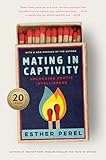
Mating in Captivity by Esther Perel
Author: Esther Perel, psychotherapist and host of the podcast Where Should We Begin? · First published: 2006 (20th-anniversary edition 2026) · Evidence: Experience and ideas · Best for: long-term couples who feel close but not desired · Read together? Either
Perel argues that intimacy needs closeness and security, while desire needs some mystery and distance. Keeping desire alive, in her view, means making room for each partner’s separateness, not only more closeness. The book is written as essays and client stories, with no formal exercises.
Come as You Are by Emily Nagoski
Author: Emily Nagoski, PhD in health behavior (Indiana University), who trained at the Kinsey Institute’s sexual health clinic and states that she is not a therapist · First published: 2015 (revised 2021) · Evidence: Research-based · Best for: readers, mainly women, who want to understand their own desire · Read together? Alone first, then share
Come as You Are explains sexual response through an “accelerator” and “brakes” that differ in sensitivity from person to person. The idea comes from the Dual Control Model developed by Bancroft and Janssen at the Kinsey Institute. Nagoski’s point is that stress and context often matter more than anything being “wrong” with you. The book includes worksheets, and a separate workbook is available.

Most of the books so far assume you’re already in a relationship. If you’re not, start here.
Best relationship books for singles and dating
If you’re single, start with a book that helps you understand your own patterns before you look for a partner. Attached is the strongest choice because its questionnaires show how you react to closeness and distance. For a reflective, step-by-step approach, Calling in “The One” by Katherine Woodward Thomas is set up as a seven-week program for readers who want to break old dating patterns. Read our summary of Calling in “The One”.
Christian readers looking for faith-based dating books can see our summaries of True Love Dates and 31 Prayers For My Future Husband.
If you’re single because a relationship just ended, see our best books to read after a breakup, sorted by the stage you’re in.
Which relationship books can couples read together?
The best books to read as a couple are the ones with built-in exercises for two. Eight Dates, Hold Me Tight, The Seven Principles for Making Marriage Work, and Getting the Love You Want are all built around activities or conversations you do together.
| Book | Built-in exercises | How to read it together |
|---|---|---|
| Eight Dates | Eight planned dates with prep steps and questions | One date every week or two |
| Hold Me Tight | Seven guided conversations | One conversation at a time, after you’ve both read the chapter |
| The Seven Principles for Making Marriage Work | Questionnaires and exercises | Take the questionnaires separately, then compare answers |
| Getting the Love You Want | Many couple exercises, including the Imago Dialogue | Practice the dialogue on small topics first |
| Fight Right and Wired for Love | Practical tools and exercises | Read the chapter that matches your usual argument |
Books without exercises, such as All About Love or Mating in Captivity, still work well as a two-person book club: read a chapter each and talk about one idea that surprised you.
Popular relationship books to read with a critical eye
A book can be hugely popular without strong evidence behind it. That doesn’t make it useless, but it helps to know which ideas have been tested and which are the author’s opinion. Three popular claims deserve a closer look: the Mars and Venus idea, the five love languages, and Gottman’s famous divorce-prediction figure.
Men Are from Mars, Women Are from Venus (John Gray, 1992). The book’s premise is that men and women communicate in fundamentally different ways. Research doesn’t support that framing. A review of 46 meta-analyses found that 78% of gender differences were close to zero or small, according to Hyde’s 2005 paper “The Gender Similarities Hypothesis” in American Psychologist. A 2013 study by Carothers and Reis in the Journal of Personality and Social Psychology found that psychological sex differences fall along a continuum rather than into two separate groups. Gray’s doctorate is from Columbia Pacific University, an unaccredited school. Read our summary of Men Are from Mars.
The five love languages. As covered above, a 2024 research review found little support for the idea that everyone has one main love language or that matching languages improves relationships.
Gottman’s “94% accuracy” figure. The number comes from a 1992 study of 52 couples by Buehlman, Gottman, and Katz in the Journal of Family Psychology, which predicted divorce about three years later. Critics Heyman and Smith Slep (2001, Journal of Marriage and Family) pointed out that such figures come from equations fitted to the same small samples, without testing them on new couples. When they tested that kind of equation on new data, accuracy dropped from 90% to 69%. Gottman’s practical advice is still useful; just don’t read the famous number as a precise forecast.
Romantic relationships aren’t the only ones that benefit from better skills, though.
Beyond romance: books for every relationship
Some of the most useful relationship skills aren’t romantic at all: listening, curiosity, and asking better questions. The two books below focus on those everyday skills, so they help with partners as much as with friends, family, and coworkers.
- How to Know a Person by David Brooks focuses on paying real attention to other people and asking questions that go deeper than small talk. Read our summary.
- How to Talk to Anyone by Leil Lowndes collects 92 short tips for conversation and first impressions. Read our summary.
You can browse all of our summaries in Book Reviews.
Relationship book FAQs
These are the questions readers ask most often when choosing a relationship book: which one is the best overall, whether self-help books work, which books suit men or women, and how couples should read together. Each answer points back to the picks above.
What is the number one relationship book?
There isn’t one book that fits every couple, but The Seven Principles for Making Marriage Work by John Gottman and Nan Silver is the most common first recommendation. It’s based on Gottman’s long-running research with couples and covers both friendship and conflict. If your main problem is emotional distance, Hold Me Tight may suit you better.
Do relationship self-help books actually work?
Research on the books themselves is thin; most evidence is about the therapy models behind them. Emotionally Focused Therapy, the model behind Hold Me Tight, has good results in randomized trials, but those studies involve trained therapists. A book gives you shared language and exercises, and it works best when both partners actually do the exercises.
What are good relationship books for men?
Men who like structure and clear steps often start with The Seven Principles for Making Marriage Work, Wired for Love, or Nonviolent Communication. All three give concrete tools rather than general encouragement. None of the books on this list is written only for men or only for women, apart from Come as You Are, which mainly addresses women.
What are good relationship books for women?
Women looking for relationship books often choose Attached, Hold Me Tight, Come as You Are, or All About Love. Come as You Are is the one written mainly for women; the others work for any reader. Pick by the problem you want to solve, not by gender.
Should couples read the same book at the same time?
Yes, if the book has exercises for two, but go slowly. Read one chapter each week, do the exercise, and talk about it. Don’t use the book to prove your partner wrong; quoting a chapter in the middle of an argument usually makes the argument worse.
Even the best-supported book is a general guide. So when is it time to look beyond one?
When is a relationship book not enough?
A relationship book is a good first step, but it can’t replace a couples therapist, and communication books are the wrong tool if your partner controls, threatens, or hurts you. Consider professional help, such as a licensed couples therapist, if:
- the same conflict hasn’t changed after months of trying,
- one of you has stopped wanting to try,
- there’s been an affair or another serious breach of trust, or
- anxiety, depression, or substance use is affecting the relationship.
If you feel unsafe, a book about communication won’t fix that. In the U.S., you can call the National Domestic Violence Hotline at 1-800-799-7233 or text START to 88788. If you or someone you love is in crisis, call or text 988 to reach the 988 Suicide & Crisis Lifeline.
Sources
- Gottman, J. M., & Silver, N. The Seven Principles for Making Marriage Work (Harmony, rev. 2015). Publisher page
- Rathgeber, M., Bürkner, P.-C., Schiller, E.-M., & Holling, H. (2019). The efficacy of Emotionally Focused Couples Therapy and Behavioral Couples Therapy: A meta-analysis. Journal of Marital and Family Therapy, 45(3), 447–463. Abstract
- Gehlert, N. C., Schmidt, C. D., et al. (2017). Randomized trial of Imago Relationship Therapy workshops. Journal of Couple & Relationship Therapy. Article
- Impett, E. A., Park, H. G., & Muise, A. (2024). Popular psychology through a scientific lens: Evaluating love languages from a relationship science perspective. Current Directions in Psychological Science. DOI
- Fraley, R. C., & Waller, N. G. (1998), taxometric study of adult attachment; Fraley, R. C., et al. (2015). Journal of Personality and Social Psychology. Overview by R. C. Fraley
- Kinsey Institute. The Dual Control Model (Bancroft & Janssen).
- Hyde, J. S. (2005). The gender similarities hypothesis. American Psychologist, 60(6). PDF (APA)
- Carothers, B. J., & Reis, H. T. (2013). Journal of Personality and Social Psychology, 104(2), 385–407. Summary (ScienceDaily)
- Buehlman, K. T., Gottman, J. M., & Katz, L. F. (1992). How a couple views their past predicts their future. Journal of Family Psychology, 5, 295–318. Gottman Institute summary
- Heyman, R. E., & Smith Slep, A. M. (2001). The hazards of predicting divorce without crossvalidation. Journal of Marriage and Family. Full text (PMC)
- Author pages: The Gottman Institute, Hachette: Hold Me Tight, Columbia Psychiatry: Amir Levine, CNVC: Marshall Rosenberg, Stan Tatkin, Moody Publishers: Gary Chapman, Esther Perel, Emily Nagoski, Imago Relationships, Berea College: bell hooks, Penguin Random House: David Richo
- National Domestic Violence Hotline · 988 Suicide & Crisis Lifeline
This page was drafted with AI writing tools and edited by the Truth In Flirting team, which writes under pen names. It is general information, not therapy or personal advice. How we use AI.