
The Best Books on Communication in Relationships, Sorted by Problem

The best book on communication in relationships depends on the conversation that keeps going wrong. If your talks turn into blame, start with Nonviolent Communication by Marshall Rosenberg. If you keep having the same fight, Fight Right by John and Julie Gottman is written for exactly that. If one of you pushes to talk while the other shuts down, read Hold Me Tight by Sue Johnson. And if your problem is saying no, Set Boundaries, Find Peace by Nedra Glover Tawwab is the clearest place to start.
Below you’ll find a quick-pick table, how we chose, the books grouped by problem (blame, repeat fights, hard conversations and listening, boundaries), a note on The 5 Love Languages and general communication bestsellers, and when a book isn’t enough.
Disclosure: As an Amazon Associate we earn from qualifying purchases. Buying through the book links on this page costs you nothing extra. Learn more.
How this list was made: this is a research summary, not a reading diary. See our method.
Which communication book fits your problem?
Pick the book that matches the conversation that keeps going wrong, not the one with the most reviews. A couple who can’t ask for anything without blaming each other needs a different book than a couple where one partner goes silent the moment a problem comes up. The table matches 12 common problems to a first book.
| If this sounds like you | Start with | Why this one | Read together? |
|---|---|---|---|
| Your requests come out as blame | Nonviolent Communication | A four-step way to say what happened, what you feel, what you need, and what you’re asking for | Either |
| You know what to say but lose it when you’re upset | Say What You Mean | Adds mindfulness and body awareness to the same method | Alone first |
| You keep having the same argument | Fight Right | The Gottmans’ book about conflict only | Yes |
| One of you pushes to talk, the other shuts down | Hold Me Tight | Treats the pursue-withdraw cycle as the problem, not either partner | Yes |
| You want blunt rules for fighting fair | The New Rules of Marriage | Direct dos and don’ts, including turning complaints into requests | Yes |
| You keep putting off a talk you need to have | Difficult Conversations | A step-by-step way to prepare for a talk you dread | Alone |
| Your partner says you never listen | You’re Not Listening | Explains why we tune out the people we know best | Alone |
| Someone got hurt and the apology keeps going wrong | Why Won’t You Apologize? | How to give, and ask for, an apology that repairs | Either |
| You say yes when you mean no | Set Boundaries, Find Peace | Plain wording for stating a limit without over-explaining | Alone |
| You want a faith-based book on boundaries | Boundaries | The Christian classic on when to say yes and how to say no | Either |
| You want one broad, research-based book | The Seven Principles for Making Marriage Work | Gottman’s all-round overview, covered on our main relationship book list | Yes |
| You’ve run out of things to talk about | Eight Dates | Eight planned conversations with question lists; see our summary of Eight Dates | Yes |
How we chose these books
This list is a research summary, not a reading diary. The Truth In Flirting editorial team, which writes under pen names and uses AI drafting tools, compared reading lists from a psychotherapist trained in the Gottman Method and Emotionally Focused Therapy, a licensed marriage and family therapist, Marriage.com, a boundaries site, and reader discussions. We then checked each author’s background, the method behind each book, and published research on the communication patterns the books target. We did not read every book cover to cover, and we don’t claim to have.
Each pick carries one of the three evidence labels used on our main relationship book list:
- Research-based: the book is built on the authors’ own studies of couples or on an established research model.
- Clinical model: the book is based on a couples-therapy method used by trained therapists.
- Experience and ideas: the book draws on the author’s practice, teaching, or faith background rather than on tested outcomes.
A label isn’t a quality score. Most communication classics sit in the third group. The label tells you what kind of advice you’re getting. Read more about our process in our review guidelines.
Best books for saying what you need without blame
If your requests come out as criticism, start with a book that teaches you to describe the problem instead of attacking the person. Nonviolent Communication gives you the original four-step method, and Say What You Mean teaches the same method with more attention to staying calm while you use it.
The first minutes of a hard talk matter more than most couples think. Sybil Carrère and John Gottman filmed 124 newlywed couples discussing an ongoing disagreement and followed them for six years. The 17 couples who later divorced had started those talks with more negative emotion and less positive emotion within the first three minutes, according to the study in Family Process (1999). The researchers contrasted a global criticism (“You’re lazy and never do anything around the house”) with a specific complaint (“You didn’t take out the trash last night”). Seventeen divorces is a small number, so read this as a strong pattern, not a forecast for your relationship.
Nonviolent Communication by Marshall B. Rosenberg
Author: Marshall B. Rosenberg, PhD in clinical psychology (University of Wisconsin), founder of the Center for Nonviolent Communication · First published: 1999 (3rd edition 2015) · Evidence: Experience and ideas · Best for: partners whose conversations turn into blame · Read together? Either; it works for one person too
Nonviolent Communication (NVC) teaches a four-step way to ask for what you need: say what you observed, name how you feel, name the need behind the feeling, and make a clear request. The point is to separate what happened from your judgment of it.
“You never text me back” becomes “When I didn’t hear from you all evening, I felt worried, because I need to know we’re okay. Could you send a quick message when you’re busy?” The book isn’t written only for couples, but the method transfers directly to them.
Worth knowing: we found no large trials of NVC with couples. Treat it as a well-regarded method rather than a proven one.


Say What You Mean by Oren Jay Sofer
Author: Oren Jay Sofer, a Certified Trainer of Nonviolent Communication and Somatic Experiencing Practitioner who teaches mindfulness and meditation · First published: 2018 · Evidence: Experience and ideas · Best for: people who know what they should say but lose it when they’re upset · Read together? Alone first
Say What You Mean is Nonviolent Communication with extra attention to what happens in your body before you speak. Sofer combines the NVC steps with mindfulness and body awareness, so the book spends more time on noticing your reaction and slowing it down. Marriage.com recommends it for couples who tend to shut down or feel overwhelmed during difficult conversations. Choose it over Rosenberg’s book if you already understand “observe, feel, need, request” but your voice rises before you can use it.

Clear requests help, but many couples already know what they want to say. Their problem is that the same fight keeps coming back.
Best books for couples who keep having the same fight
If the same argument keeps returning, pick a book that treats the pattern between you as the problem, not your partner. Fight Right is the Gottmans’ book about conflict, Hold Me Tight focuses on the cycle where one partner pursues and the other withdraws, and The New Rules of Marriage gives blunt rules for fighting fair.
Two findings explain why these books look at patterns rather than at who’s right. The Gottman Institute says 69% of relationship problems are “perpetual problems” that never fully go away, so the realistic goal is to discuss them without criticism, contempt, defensiveness, or stonewalling. The second finding is about a specific pattern. Demand-withdraw, where one partner pushes with requests or complaints and the other avoids or goes silent, was linked to lower relationship satisfaction, less intimacy, and poorer communication in a meta-analysis of 74 studies with 14,255 participants, according to Paul Schrodt and colleagues in Communication Monographs (2014). The pattern did the same damage whichever partner did the demanding, and people caught in it tend to see the other person as the cause.
Fight Right by Julie Schwartz Gottman and John Gottman
Authors: Julie Schwartz Gottman, PhD, a clinical psychologist, and John Gottman, PhD · First published: 2024 · Evidence: Research-based (draws on the Gottmans’ research, cited in general terms) · Best for: couples stuck in the same argument · Read together? Yes
Fight Right is the book to choose if arguments, not distance, are your main problem. It describes common conflict styles, which the Gottmans call avoiders, validators, and volatiles, and shows how partners with different styles can work together. Its main advice is to calm down and understand each other before trying to solve anything.
Lily Manne, a psychotherapist trained in the Gottman Method, calls it her favorite of the Gottmans’ books because it lays out their interventions and when to use each one.

Hold Me Tight by Sue Johnson
Author: Dr. Sue Johnson, clinical psychologist and developer of Emotionally Focused Therapy (EFT) · First published: 2008 · Evidence: Clinical model · Best for: couples where one partner pursues and the other withdraws · Read together? Yes, it’s built around seven conversations for two
Hold Me Tight treats most couple fights as panic about losing the connection, not as disagreements about dishes or money. Johnson calls these negative cycles “Demon Dialogues,” and her pursue-withdraw cycle is the same shape as the demand-withdraw pattern in the research above. The book then walks you through seven conversations meant to help each partner reach for the other again.
Mark Odland, a licensed marriage and family therapist, recommends it for couples where “one person pushes for a conversation while the other withdraws.”
Worth knowing: EFT has solid support as a therapy. A 2019 meta-analysis of 33 randomized trials with 2,730 participants found a medium effect at the end of treatment, according to Rathgeber and colleagues in the Journal of Marital and Family Therapy. That evidence is for therapy with a trained therapist, not for reading the book on your own. The book also appears on our list of books on attachment styles.

The New Rules of Marriage by Terry Real
Author: Terry Real, LICSW, a family therapist and founder of the Relational Life Institute · Edition listed: 2008 paperback (Ballantine) · Evidence: Clinical model (Relational Life Therapy) · Best for: couples who want direct rules for fighting fair · Read together? Yes
The New Rules of Marriage is the most direct book in this section: it tells you what to stop doing in a fight and what to do instead. Lily Manne describes it as “an instructional bible” that covers boundaries, making requests instead of criticizing, and the “us” mentality, and she calls it “really worth reading together with your partner.” She adds that all the books on her list are worth reading if you’re single too, so the title shouldn’t put off unmarried couples.
Worth knowing: we found no randomized trials of Relational Life Therapy itself. Manne also recommends Real’s later book, Us.

Not every problem is a repeat fight. Sometimes it’s the talk you’ve been avoiding, or the apology that never lands.
Best books for hard conversations, listening, and repair
If you’re avoiding a talk you need to have, feel unheard, or can’t get past a hurt, these three books cover the parts of communication that fights push aside: preparing, listening, and apologizing. Difficult Conversations helps you prepare for a talk you dread, You’re Not Listening is about actually hearing the other person, and Why Won’t You Apologize? is about repair after someone gets hurt.
Listening often matters more than eloquence. In Gottman’s six-year study of newlyweds, couples who stayed together responded to each other’s small bids for attention, such as a comment, a sigh, or a hand across the table, 86% of the time, while couples who divorced did so 33% of the time, according to the Gottman Institute.
Difficult Conversations by Douglas Stone, Bruce Patton, and Sheila Heen
Authors: Douglas Stone, Bruce Patton, and Sheila Heen of the Harvard Negotiation Project · First published: 1999 (revised edition 2023) · Evidence: Experience and ideas · Best for: people who put off a talk because they dread it · Read together? Alone
Difficult Conversations gives you a step-by-step way to prepare for a conversation you’ve been avoiding. It looks at what makes a talk feel so hard, such as fear of conflict, a threat to how you see yourself, or strong emotion, and at how to handle each part.
The book came out of the Harvard Negotiation Project and isn’t written only for couples. Marriage.com still includes it on its list of communication books for couples because it helps you avoid blame and keep listening when the topic is painful.

You’re Not Listening by Kate Murphy
Author: Kate Murphy, a Houston-based journalist who has written for The New York Times, The Wall Street Journal, and The Economist · Edition listed: 2021 paperback (Celadon) · Evidence: Experience and ideas · Best for: partners who hear “you never listen” · Read together? Alone
You’re Not Listening explains why we stop listening to the people we know best, and what that costs a relationship. Murphy’s argument, as she put it in The New York Times, is that we tend to tune out people we feel close to because we think we already know what they’re going to say. In a relationship, that can look like hearing your partner’s first sentence and answering the argument you expect instead of the one they’re making.
Worth knowing: this is more of an argument than a manual. One Amazon reviewer calls it “more a cry to listen more and less a how-to,” so pair it with Nonviolent Communication if you want steps.

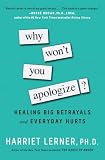
Why Won’t You Apologize? by Harriet Lerner
Author: Harriet Lerner, PhD in clinical psychology, who taught and supervised at the Menninger Foundation for more than two decades · First published: 2017 · Evidence: Experience and ideas · Best for: couples stuck after a hurt, big or small · Read together? Either
Why Won’t You Apologize? covers the step most communication books skip: repairing things after someone gets hurt. Lerner uses client stories to show why some apologies heal and others don’t. The subtitle, Healing Big Betrayals and Everyday Hurts, shows its range, from small slights to serious breaches of trust. Lily Manne recommends it because it helps readers “understand why apologies are effective and why not.”
Sometimes the conversation you need isn’t about repair. It’s about limits.
Best books on boundaries in relationships
For most readers, the best book on boundaries in relationships is Set Boundaries, Find Peace by Nedra Glover Tawwab; if you want a faith-based approach, Boundaries by Henry Cloud and John Townsend is the classic. Both teach you to state a limit clearly and hold it without long apologies.
A boundary describes what you’re comfortable with. It isn’t a rule for your partner. Loveisrespect, a healthy-relationships resource for young adults, puts the difference simply: healthy boundaries protect and respect you, while unhealthy ones try to control or harm someone else. “I need time with my friends” is a boundary. “Stop talking to other guys because I get jealous” is an attempt at control.
Set Boundaries, Find Peace by Nedra Glover Tawwab
Author: Nedra Glover Tawwab, a licensed therapist with almost 20 years of experience in relationship therapy and founder of Kaleidoscope Counseling · First published: 2021 · Evidence: Experience and ideas · Best for: people-pleasers who say yes when they mean no · Read together? Alone
Set Boundaries, Find Peace is a practical guide to noticing where you need a limit and saying it out loud. Tawwab’s view, stated on her website, is that a lack of boundaries and assertiveness underlies most relationship issues.
Seeking Better Balance, a site about boundary-setting, points to its wording for everyday situations and its look at why boundaries feel hard in the first place. The book became an instant New York Times bestseller and has been translated into more than 35 languages, according to Tawwab’s website.
Worth knowing: this is a book about boundaries in general, not only with a partner, so not every chapter will apply to your relationship.

Boundaries by Henry Cloud and John Townsend
Authors: Drs. Henry Cloud and John Townsend · Edition listed: updated and expanded edition, 2017 (Zondervan) · Evidence: Experience and ideas · Best for: readers who want a Christian approach to boundaries · Read together? Either
Boundaries is the long-running classic on when to say yes and how to say no, written from a Christian perspective. Its book description calls its insights “biblically based” and covers boundaries with parents, spouses, children, friends, and co-workers. Seeking Better Balance calls it faith-based but practical even for readers who aren’t religious. Couples who want a book about marriage specifically can look at the authors’ follow-up, Boundaries in Marriage.
Worth knowing: the Bible is part of the argument, not just background. If you want a secular book, start with Tawwab.

Is The 5 Love Languages a communication book?
Not really: The 5 Love Languages is about how you show care, not about how you talk through a problem. Gary Chapman’s idea is that each person mainly gives and receives love through words of affirmation, quality time, gifts, acts of service, or physical touch. It still shows up on many communication reading lists, including Marriage.com’s, and Mark Odland, LMFT, calls it “a useful conversation tool, not a complete explanation of relationships.”
The small body of research doesn’t strongly support the book’s main assumptions, according to a 2024 review by Impett, Park, and Muise in Current Directions in Psychological Science. The quiz can start a good talk, but it won’t tell you what to say when you disagree. We cover the book and its evidence on our main relationship book list.
Why aren’t general communication books on this list?
General bestsellers like How to Win Friends and Influence People and How to Talk to Anyone teach you to make a good impression, often on strangers or at work, while a couple’s problem is usually one tense conversation that keeps repeating with the same person. How to Win Friends appears first on Goodreads’ “communication and relationships” shelf, and both books turn up on general “best communication books” lists, which is why they come up when you search this topic.
They aren’t useless. A better listening habit or a warmer opening helps at home too. But if you’re choosing one book for your relationship, pick one written for two people who already know each other. Our summary of How to Talk to Anyone explains what that book does cover. If you suspect your reactions come from how you attach to partners, see our best books on attachment styles.
Reading this after a talk that went wrong?
If one conversation sent you here, start with the article about that situation, then pick the book that matches the pattern behind it.
| What happened | Read first | Book for the pattern |
|---|---|---|
| He gets angry when you ask questions | Boyfriend gets mad when I ask questions | Fight Right |
| She won’t tell you what’s bothering her | My girlfriend doesn’t share her problems | You’re Not Listening |
| She’s ignoring you but hasn’t blocked you | She ignores me but doesn’t block me | Hold Me Tight |
| He left you on seen after an argument | Why did he leave me on seen? | Hold Me Tight |
| Your girlfriend seems angry all the time | Why is my girlfriend always angry at me? | Nonviolent Communication |
| You want to be honest without being harsh | Honest, kind communication | Difficult Conversations |
| You want better everyday communication | Strategies for healthier communication | Nonviolent Communication |
| You want to stop reacting to every silence | How to be unbothered | Set Boundaries, Find Peace |
Communication book FAQs
What is the best book for improving communication in relationships?
The best first book is the one aimed at your specific problem: Nonviolent Communication for blame, Fight Right for repeat arguments, and Hold Me Tight for a pursue-withdraw cycle. If you’d rather start with one broad, research-based book, The Seven Principles for Making Marriage Work by John Gottman and Nan Silver is recommended by Mark Odland, LMFT, and appears on Marriage.com’s list.
What are the top 5 communication books for couples?
From the reading lists we compared, five strong picks are Nonviolent Communication, Fight Right, Hold Me Tight, Difficult Conversations, and The New Rules of Marriage. Each covers a different skill: asking without blame, handling conflict, breaking the pursue-withdraw cycle, preparing for hard talks, and fighting fair.
What is the best book for setting boundaries?
Set Boundaries, Find Peace by Nedra Glover Tawwab is the most practical starting point for most readers, and Boundaries by Henry Cloud and John Townsend is the best-known faith-based choice. See our boundaries picks.
What are some normal boundaries in a relationship?
Normal boundaries describe what you’re comfortable with, such as keeping your passwords private, texting regularly but not several times an hour, or keeping weekend time for friends and family. Those examples come from loveisrespect, which adds that you can change a boundary later and that being afraid to state one because your partner might react with anger or violence is a warning sign.
Does a communication book help if only one partner reads it?
Yes, it can. Marriage.com’s editors say one person’s changes in listening and tone often shift how the other responds, and Mark Odland, LMFT, suggests focusing on what you can change rather than using the book to prove your partner is the problem. A book can’t make an unwilling partner change, though.
What is the 7-7-7 rule for couples?
The 7-7-7 rule is a social media guideline: a date every 7 days, a night away every 7 weeks, and a vacation every 7 months. The Gottman Institute calls it “a good start” but says time together isn’t the same as connection, and points to the everyday bids for attention described in the listening section above.
When is a communication book not enough?
A communication book can teach you what to say, but it can’t make it safe to say it. Lily Manne notes that you can understand everything in these books and still end up in the same fight, because the reaction happens before you remember the skills. Mark Odland, LMFT, suggests considering couples counseling when:
- you keep having the same arguments after trying books and other strategies,
- trust has been damaged by dishonesty or infidelity,
- trauma, addiction, anxiety, or depression is affecting the relationship, or
- one or both of you are considering separation.
If your partner threatens, controls, or hurts you, the problem isn’t communication. The National Domestic Violence Hotline says “abuse is not a relationship problem” and doesn’t encourage couples counseling with an abusive partner, partly because what you say in a session can be used against you later. In the U.S., you can call the Hotline at 1-800-799-7233 or text START to 88788. If you or someone you love is in crisis, call or text 988 to reach the 988 Suicide & Crisis Lifeline.
Sources
- Carrère, S., & Gottman, J. M. (1999). Predicting divorce among newlyweds from the first three minutes of a marital conflict discussion. Family Process, 38(3), 293–301. Abstract (Wiley) · UW News summary
- Schrodt, P., Witt, P. L., & Shimkowski, J. R. (2014). A meta-analytical review of the demand/withdraw pattern of interaction. Communication Monographs, 81(1), 28–58. Abstract · ScienceDaily summary
- Rathgeber, M., Bürkner, P.-C., Schiller, E.-M., & Holling, H. (2019). The efficacy of Emotionally Focused Couples Therapy and Behavioral Couples Therapy: A meta-analysis. Journal of Marital and Family Therapy, 45(3), 447–463. Abstract
- Impett, E. A., Park, H. G., & Muise, A. (2024). Popular psychology through a scientific lens: Evaluating love languages from a relationship science perspective. Current Directions in Psychological Science. DOI
- The Gottman Institute. The 777 Rule for Marriage: A Good Start (2026).
- National Domestic Violence Hotline. Should I Go To Couples Therapy With My Abusive Partner?
- loveisrespect. What are my boundaries?
- Reading lists: Lily Manne, psychotherapist · Mark Odland, LMFT (Lion Counseling) · Marriage.com · Seeking Better Balance
- Author pages: CNVC: Marshall Rosenberg · Oren Jay Sofer · The Gottman Institute · Hachette: Hold Me Tight · Terry Real · Kate Murphy · Harriet Lerner · Nedra Glover Tawwab · Boundaries Books
- National Domestic Violence Hotline · 988 Suicide & Crisis Lifeline
This page was drafted with AI writing tools and edited by the Truth In Flirting team, which writes under pen names. It is general information, not therapy or personal advice. How we use AI.